It doesn’t matter if your goal is aesthetics, strength, or simply aging well; squats are one of the most effective and versatile lower-body exercises you can do. They build muscle, strengthen joints, improve athletic performance, burn calories, and can even support heart and bone health.
Ask any personal trainer or fitness coach for their best leg day advice, and they’ll tell you that if you want a training program that works, you should probably include some variation of a squat.
Of course, you can build your legs without squats. There are plenty of lower-body exercises that target the quads, hamstrings, and glutes from different angles. However, nothing quite compares to what a well-executed squat does for total strength and muscle balance. Well, I guess we should say squats (plural), because there isn’t only one way to squat.
There are dozens of squat variations, each with its own advantage. Some squat variations are perfect for beginners learning form or those managing back or knee pain, others push advanced lifters to new levels of power and performance, and sometimes it’s just a good idea to add some variation to your leg days to avoid plateaus.
Love them or hate them, squats are one of the best ways to build a strong, capable body. In this ultimate squat variation guide, our expert fitness team will explain why squat variations are important, the best ways to squat based on your goals or limitations, and break down the most popular squat variations, as well as a few others you might have never heard about before.
Why Add Squat Variations to Your Leg Workout?
All squats target the legs, but certain squat types work the quads more, while others hit the hamstrings or glutes a bit harder, or challenge your balance and flexibility. Adding squat variations to your leg workout can enhance overall lower body muscle development and strength, reduce injury risk, prevent workout plateaus, and keep your workouts from being boring and stagnant.
You’ve probably seen leg day workouts titled “the no squat workout,” or social media posts that tell you that you can get “bigger legs without squatting.” It’s true that you don’t have to squat to build strong legs.
Other lower-body exercises can be just as effective as squats and possibly better, depending on your goals, body mechanics, or joint health. Lunges, step-ups, leg presses, and single-leg movements like the Bulgarian split squat all train your quads, hamstrings, glutes, and/or calves, and each has its own advantages.
That said, squats remain one of the foundational “big five” compound lifts for a reason. A compound movement means it trains multiple major muscle groups and joints at once, requiring coordinated effort from the entire body.
If you want to grow your lower body, squat variations should be part of your workout program.
Beyond building leg muscle and strength, squats have a long list of full-body benefits for every goal and every fitness level.
Science-Backed Benefits of Squat Variations
We probably don’t have to tell you that squats are the foundation of any good leg day. It’s also no surprise that the most significant benefit of squatting is that it helps you develop leg muscles and lower-body strength.
However, from helping you perform daily tasks, to improving your posture and balance, building stronger bones and joints, balancing hormones, and even strengthening your heart and bones, there are probably more benefits to doing squats than you’re aware of.
- Help prevent injuries: Squats strengthen not only the prime movers of the lower body but also stabilizers around the hips, knees, and ankles. This improves balance and resilience during daily activities and athletic training.
- Strengthen the core: Every squat variation demands core engagement to protect the spine and maintain proper posture under load.
- Boost hormone balance: Strength training like regular squatting can support natural testosterone and growth hormone production, both essential for muscle growth and recovery.
- Support healthy joints: Controlled squats improve joint range of motion and stimulate cartilage health when performed correctly.
- Improve mobility, flexibility, and balance: A deep, well-executed squat challenges ankle and hip mobility while improving overall stability.
- Help with weight loss: As one of the most energy-demanding compound exercises, squats burn significant calories, increase heart rate, and elevate post-workout metabolism.
- Enhance athletic performance: Squats build explosive power that carries over into sports, sprinting, and general athleticism.
- Support glute development: While not as glute-targeted as hip thrusts, the standard squat still activates the gluteus maximus and medius. For more glute focus, there are squat variations, like the rear-leg elevated split squat (Bulgarian split squat). Movement patterns and foot placement can also turn a traditional squat into one that is more glute-dominant than quad-dominant.
- Improve heart health: Squats challenge your cardiovascular system. When you squat, blood flow and pressure both rise temporarily, forcing your heart to work harder and pump more efficiently. This increased demand can strengthen the heart muscle over time and improve circulation.
- Better bone health: Squats are a weight-bearing movement, which means they place controlled stress on your bones. This stress signals the body to build and maintain bone density, which is a key factor in preventing osteoporosis and reducing the risk of fractures later in life.
- Promote functional strength: Squats mimic real-world movements like sitting, standing, and lifting, translating to better performance in daily life.
- Squat variations help avoid workout plateaus: Changing your stance, tempo, or load introduces a new training stimulus. This challenges underused muscle fibers, prevents overuse injuries, and keeps workouts mentally engaging.
While many of these benefits apply to all forms of squatting, each squat variation brings its own unique advantage, making it beneficial to pick a squat variation that aligns with your specific goal or limitation.
What Muscles Do Squats Work?
If you’ve ever crushed a tough leg day and felt soreness in muscles in your lower body that you didn’t even know existed, you already know why squats earn their reputation as the king of lower-body exercises. Squats are a compound exercise that work every muscle in your lower body (and more).
The squat variation you choose will shift which muscles work the hardest, but here’s a look at the key muscles activated in nearly every squat:
- Quadriceps: Your quads are the large muscles on the front of your thighs that extend your knees and drive you out of the bottom position. While some squat variations target the quads more than others, they all hit this part of our legs pretty hard.
- Hamstrings: Located on the back of the thighs, your hamstrings control your descent and assist hip extension as you stand up. While deadlifts and leg curls are the most commonly known hamstring exercises, squats also engage this muscle, with some variations targeting the hamstrings more than others.
- Gluteus maximus, medius, and minimus: Your glutes are the powerhouse muscles of the lower body that generate strength and stabilize your hips. Every squat engages all three glute muscles, but some variations, like the sumo squat or Bulgarian split squat, recruit them to a much greater degree.
- Adductors (inner thighs): Your adductors help control knee tracking, stabilize the hips, and assist with bringing the legs back toward the center line. While there are specific accessory exercises like the adductor machine or cables that really isolate the adductors, you still get adductor activation during most squat variations.
- Erector spinae: These deep spinal muscles that run along your back work to keep your torso upright throughout the squat. They stabilize your spine under load, prevent rounding in the lower back, and help transfer power from your legs to your upper body.
- Core muscles: Your core acts as your body’s natural weight belt. It braces to stabilize your trunk, protect your spine, and maintain balance as you move through each rep. Having a strong core is beneficial for squatting, but squats also help build a stronger core.
- Calves: Your calves support ankle stability and help control both the descent and drive out of the bottom position. While they’re not the primary movers of a squat, they play a key role in balance and force transfer during every squat.
Together, these muscles create the strength and stability needed for both performance and everyday movement, making squats not only the perfect way to jazz up leg day but one of the most efficient full-body exercises you can do.
How Different Squat Variations Target Specific Muscles and Goals
Different squat variations hit different leg muscles slightly more or less. We’ll dive deeper into each of the most popular squat variations next, but here are a few examples of how specific squat variations can match different goals or help address certain body limitations.
- Sumo squat for hip mobility and more inner thigh and glute activation. The sumo stance is also a gentler option for those with back pain and beginners.
- Pause squat for less stress on knees, building absolute strength, particularly in the bottom position of the lift, and for improving technique and postural control.
- Jump squat for power, explosiveness, and athletic development, as well as extra calorie burn and cardiovascular benefits.
- Single-leg squat for correcting muscle imbalances and improving balance. Less compressive force on the back and great for the hips and stabilizer muscles. Also, if you elevate your rear leg (Bavarian split squat), this squat variation is superior for glute activation.
- Box or partial squats for managing knee sensitivity and rebuilding range of motion. Also great for developing proper form for the full squat.
- Front squat for quad focus and core strength. Also, with proper form, the upright posture in a front squat can reduce lower back stress compared to other squat variations.
When deciding which squat variation is best for you, try matching your squat with your personal goals, mobility level, and/or limitations for optimal results.
How Many Types of Squats Are There?
There are squat variations that are well known or more performed than others, but there’s no official count of how many types of squats there are. Between traditional gym staples that gym-goers have done for decades and creative spins you see on social media, there are countless ways to perform a squat.
The most familiar styles include the front squat, barbell back squat, sumo squat, goblet squat, overhead squat, and pistol squat. But even within these, small changes in stance width, foot angle, depth, or equipment can completely change the movement and muscle emphasis.
When you factor in all the stance tweaks, tempos, and types of gym equipment (or no equipment at all) that you can use when squatting, there are easily hundreds of squat variations out there.
The Best Squat Variations
The best squat variation is the one that’s best for you. Your body type, mobility, injury history (such as the condition of your knees and back), and your goals all play a role in deciding which squat style you should focus on.
What challenges one person’s quads might be the perfect glute builder for someone else. Or, what one person can do with ease might put too much strain on another person’s back or be too much for another person’s joints.
Below are some of the best squat variations to include in your routine. By “best,” we mean the most effective and well-known, along with a few underrated options that deserve a permanent place in your leg day lineup.
Each offers a slightly different challenge to your quads, glutes, hamstrings, and core, helping you avoid plateaus while improving strength, balance, and mobility.
Back Squat
The back squat is probably the most recognized squat variation and the type of squat most people think of when they hear “leg day.” It’s a classic compound movement for total lower-body strength and muscle growth.
Depending on where the bar sits, you can perform a high bar or low bar squat, each with a slightly different emphasis. The high bar position targets the quads more and encourages a more upright torso, while the low bar position shifts the load toward the glutes and hamstrings, often allowing for heavier weight.
You can perform the back squat with a barbell or Smith machine. Beginners or those easing into heavier loads often prefer the Smith machine because it guides the bar’s path and offers more stability. A free barbell, on the other hand, requires greater balance and core engagement. If you’re lifting heavy without a rack, always use a spotter for safety.
How to Do a Back Squat
Position the bar across your upper back and place your feet about shoulder-width apart. The exact stance can vary slightly based on your mobility and body type, but your toes should point slightly outward. Brace your core, take a deep breath in to create tension, and lower under control until your thighs are parallel to the floor. Drive through your heels and exhale as you return to standing.
Front Squat
The front squat shifts the barbell to the front of your shoulders, demanding more upright posture and greater core stability. The front squat is one of the most effective squat variations for building leg and core strength while keeping the spine in a safer, more upright position.
By placing the barbell in front of the shoulders instead of across the back, this variation shifts more of the workload to the quadriceps while also engaging the glutes, hamstrings, and upper back. Because the front squat demands strong core stability and good mobility, it is often used by athletes and lifters who want strength that transfers to sports performance.
You can perform the front squat with a barbell, dumbbells, kettlebells, or even resistance bands. Beginners often find the goblet version (holding one dumbbell or kettlebell close to the chest) easier to learn before progressing to the full barbell front squat.
How to Do a Front Squat
Rest the barbell across the front of your shoulders with your elbows lifted and upper arms parallel to the ground. Keep your chest tall, brace your core, and lower slowly until your thighs are parallel to the floor. Push through your heels and exhale as you return to standing, keeping your elbows up throughout the movement.
Zercher Squat
The Zercher squat is a front-loaded variation that builds strength in the core, upper back, and biceps, along with the lower body. It teaches proper bracing and posture while reducing spinal compression compared to back-loaded squats.
How to Do a Zercher Squat
Place a barbell in the crook of your elbows and hold it tight against your torso. Keep your chest up, brace your core, and lower into a deep squat. Push through your heels to return to standing while keeping your back straight.
Sumo Squat
The sumo squat is another well-known squat variation that features a wide stance with toes pointed outward, shifting focus to the inner thighs, glutes, and adductors. It’s especially helpful for improving hip mobility and building strength through a different range of motion than a standard squat. Many new to strength training also find this to be a more “beginner-friendly” squat stance.
How to Do a Sumo Squat
Stand with your feet wider than shoulder-width and toes turned slightly outward. Hold a dumbbell, kettlebell, or barbell close to your body. Lower until your thighs are parallel, keeping your knees in line with your toes. Push through your heels to stand tall.
Hack Squat
The hack squat is a machine-based squat variation that targets the quadriceps with a controlled range of motion. Because the machine supports your back, it reduces spinal strain and allows you to focus on driving through the legs.
It’s a great choice for beginners learning squat depth or for anyone who wants to train the quads safely with heavier loads.
How to Do a Hack Squat
Step onto the platform with your shoulders under the pads and feet shoulder-width apart. Lower yourself slowly, keeping your hips and back pressed into the pad. Once your thighs are parallel, push through your heels to return to the starting position.
Pendulum Squat
The pendulum squat is similar to the hack squat, except the machine’s pivoting design allows a more natural hip and knee movement pattern instead of locking you into a fixed track. This creates a smoother, arcing range of motion that challenges the quads, glutes, and hamstrings while minimizing lower-back stress. I
It’s ideal for building leg size and strength with precise control and consistent tension throughout the lift. Because the movement path is guided, it’s also beneficial for lifters rehabbing injuries or working on squat depth without sacrificing stability.
How to Do a Pendulum Squat
Stand with your shoulders supported and feet slightly forward on the platform. Keep your chest up and core tight as you lower into a deep squat. Pause briefly at the bottom, then drive upward through your heels to return to standing.
Sissy Squat
Don’t let the name of this squat variation fool you. The sissy squat is an advanced bodyweight variation that isolates the quadriceps while challenging balance and control.
It’s best for experienced lifters looking to build definition and endurance in the front of the thighs. Because it places significant stress on the knees, proper form and warm-up are essential.
How to Do a Sissy Squat
Stand tall and rise onto the balls of your feet. Lean backward as you bend your knees, keeping your hips extended. Lower your body until your shins are nearly parallel to the floor, then push through your toes to return to standing.
Spanish Squat
This lesser-known squatting style is a great variation to throw in now and then to keep your muscles guessing. It could also be a great option if you have bad knees.
The Spanish squat uses a resistance band anchored behind the knees to increase quad activation while reducing pressure on the joints. It’s excellent for developing quad strength and improving knee stability, especially for those managing knee discomfort.
How to Do a Spanish Squat
Anchor a thick resistance band at knee height and step into it so the band rests behind your knees. Step forward until there’s tension. Sit back into a squat while keeping your chest upright, pause at the bottom, then return to standing.
Overhead Squat
If you are looking to burn a few more calories and engage more muscles, try the overhead squat variation. The overhead squat is a total-body movement that builds strength, balance, and mobility.
Holding the weight overhead forces engagement from the shoulders, core, and upper back, along with the quads and glutes. It’s an advanced variation that tests flexibility and coordination, often used by athletes to develop control and stability.
How to Do an Overhead Squat
Hold a barbell or PVC pipe overhead with straight arms and feet shoulder-width apart. Keep your chest up and core tight as you descend into a deep squat. Maintain the bar directly above your head as you return to standing.
Goblet Squat
The goblet squat is one of the most beginner-friendly variations and an excellent way to learn proper squat form. Holding the weight close to your chest encourages good posture and balance while training the quads, glutes, and core. It’s also a great staple warm-up or accessory exercise for lifters at any level.
How to Do a Goblet Squat
Hold a dumbbell or kettlebell at chest height with both hands. Lower your hips until your elbows are close to your knees, keeping your chest up and heels on the floor. Push through your heels to stand tall.
Jump Squat
The jump squat is a plyometric squat variation that develops explosive power and cardiovascular endurance. It targets the quads, glutes, and calves while training fast-twitch muscle fibers for speed and agility.
If you are looking for a cardio session and a killer leg workout all in one, jump squats are a great variation (especially if you hold a light weight while jumping).
How to Do a Jump Squat
Start in a standard squat position. Lower into a squat, then explode upward into a jump, landing softly with bent knees. Immediately lower into the next rep for continuous motion.
Pistol Squat
The pistol squat is a single-leg exercise that challenges strength, balance, and mobility. It targets the quads, glutes, hamstrings, and core, while revealing and correcting strength imbalances between sides.
Because it demands strong stability and mobility, it’s considered an advanced variation. But that doesn’t mean it’s reserved for gym-goers trying to train like an Olympic athlete. Many wonder if beginners can do pistol squats, and the answer is yes!
Like many exercises often considered advanced, performing a pistol squat as a beginner simply requires some modifications to the movement. Beginners can start with assisted versions using a box, TRX straps, or a pole for balance. Gradually reduce support over time to progress toward a full pistol squat.
How to Do a Pistol Squat
Stand on one leg and extend the other forward. Lower under control until your glutes are close to your heel. Push through your standing leg to return upright, keeping your chest tall and core tight.
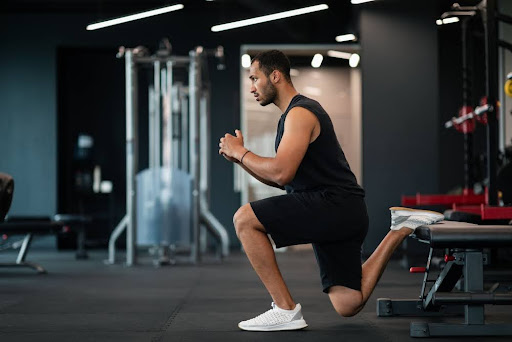
Bulgarian Split Squat
Some might call this movement a lunge, others say it’s a squat. Technically, they’re both right. Whatever you want to call it, the Bulgarian split squat (also known as the rear-foot elevated split squat) is a lower-body exercise that deserves a spot in almost every leg program, especially if your goal is stronger or more developed glutes.
In fact, one study comparing muscle activation between traditional back squats and rear-foot elevated split squats found that the single-leg version produced greater engagement in the hamstrings and glute muscles. The body recruits more stabilizers to stay balanced, which can make the movement even more effective for building strength and symmetry.
This single-leg squat variation might also be better for those with back pain, as it reduces lower-back stress by keeping the load on one leg at a time instead of compressing the spine. It also improves balance, mobility, and coordination.
How to Do a Bulgarian Split Squat
Stand a few feet in front of a bench or platform and rest your back foot on it. Lower your back knee toward the ground, keeping your front knee aligned with your toes. Push through your front heel to return to standing, keeping your torso upright throughout the movement.
Squats vs. Lunges: Is One Better and Do You Need Both?
At RAW Athletic Club, our personal trainers get asked all kinds of questions about what is needed for a good leg workout. Most questions focus on post-workout recovery, what to eat for muscle gain, whether free weights or machines are better for muscle growth, and if creatine is truly as essential as people claim.
Another question that comes up when discussing how to build a custom workout that actually works is if you need to do both squats and lunges, and if one is better than the other.
Both squats and lunges are excellent for building a strong, balanced lower body. Squats train both legs together, building overall strength and power, while lunges work one leg at a time, improving balance, coordination, and stability.
Whether you need both depends on your goals, training style, and how your body moves. Some squat variations target the same muscles as lunges, while others emphasize completely different movement patterns. Depending on your program, one may complement the other, or even serve as a substitute.
If your goal is to improve balance, athletic coordination, or single-leg strength, lunges are the better choice. They activate stabilizer muscles and correct side-to-side imbalances that heavy bilateral lifts sometimes overlook. If you’re aiming to lift heavier weight and build overall muscle mass, squats take the lead since they allow you to move more weight safely and efficiently.
For most people, combining squat variations and different types of lunging is ideal. Squats develop raw strength and muscle, while lunges fine-tune control, mobility, and unilateral balance.
Important Note From RAW Athletic Club Trainers on Squat Variation Progression and Safety
Squats are one of the most effective exercises for building strength and muscle, but they can also become one of the most dangerous if you ignore proper form or let ego take over.
Technique, mobility, and control matter far more than the amount of weight on the bar. This applies to every squat variation, but especially to advanced movements like heavy back squats, the pistol squat, overhead squat, and Zercher squat.
If you’re new to lifting, start with the basics, such as bodyweight squats and front squats on a Smith machine, before adding weight or complexity. Once you’ve built a strong foundation, you can safely progress to more advanced styles.
If you’re unsure where to start or how to progress safely, consider scheduling a few sessions with one of our certified personal trainers. They’ll help you refine your form, select the right squat variations for your body, and train with confidence while avoiding unnecessary injury risk.
How Do You Master Proper Squat Form?
Proper form when lifting protects your joints, improves muscle activation and keeps you progressing safely, especially with compound lifts like squats.
You can find countless “how-to squat with proper form” videos online for nearly every squat variation, but nothing replaces hands-on guidance. But we suggest that you hire a personal trainer, or in the very least, ask an experienced lifter at your gym to help you master squatting.
While proper form will vary slightly based on the squat variation you are performing and your body mechanics, here are a few universal cues to help you build a strong, safe foundation:
1. Focus on depth and control
Aim to lower until your thighs are parallel to the floor or slightly below, keeping tension throughout the movement. Move slowly and avoid bouncing at the bottom.
2. Keep your chest up and spine neutral
A strong squat starts with posture. Engage your core, keep your chest lifted, and maintain a straight back from start to finish.
3. Track your knees over your toes
Your knees should move in line with your toes, not inward. This protects your joints and ensures even muscle recruitment.
4. Distribute your weight evenly
Keep your heels grounded and balance your weight between the midfoot and heel. Avoid leaning too far forward or shifting to your toes.
5. Use supportive tools
A Smith machine helps beginners stay upright and learn control. A box squat builds consistent depth, while TRX straps can support balance and confidence through the motion.
6. Record and watch yourself on video
Filming your workouts is one of the easiest ways to improve your squat. Seeing your form from the side or front can reveal small errors in depth, knee position, or balance that you might not feel during the lift. To learn more, read “Why You Should Film Your Workouts.”
What Equipment Do You Need for Squat Variations?
The type of equipment you need to squat depends on the type of squat you want to do. Some don’t require any equipment at all, while others can’t be done without premium equipment, often only found at luxury gyms.
If you train at RAW Athletic Club, our facilities in Port St. Lucie and Stuart, Florida, offer everything from free weights to specialized machines to match your experience level and goals.
That said, one of the best things about most squat variations is how adaptable they are. Most squat variations can be done anywhere, many with or without equipment.
Here’s some equipment you can use for most squat variations:
- Just your body: Bodyweight squats are the perfect starting point for beginners or anyone focused on mobility and endurance. They help you master form, balance, and depth without external load.
- Barbells: Best for traditional back squats, front squats, and other heavy compound lifts.
- Dumbbells and kettlebells: Great for goblet squats, sumo squats, and split squats when you want more control or less spinal load.
- Resistance bands: Useful for several squat variations like Spanish squats, or for adding tension at the top of the movement.
- Machines: Smith machines, hack squat machines, and pendulum squat setups allow guided motion and extra stability.
- Bench or box: Needed for movements like Bulgarian split squats or box squats, and helpful for learning consistent depth.
Frequently Asked Questions About Squats and Squat Variations
What squat variation is best for glutes?
For glute development, Bulgarian split squats, sumo squats, and goblet squats are excellent options. A wider stance or deeper range of motion typically increases glute activation.
Can I grow my glutes without squatting?
Yes, you can grow your glutes without squatting. In fact, movements like hip thrusts, glute bridges, and cable kickbacks provide more glute isolation than traditional squats. However, combining these with squat variations often delivers the best overall results.
What kind of squat can I do with bad knees?
If you have bad knees, you should speak with your doctor about whether or not it is safe for you to squat, and always listen to your body. That said, the Spanish squat, box squat, partial squat, or single-leg squat variations can reduce pressure on the knees.
Which squat variation is safer for the knees?
Safe squatting is less about the variation and more about proper form. However, any squat variation that is hip dominant (where your hips move back as your torso leans slightly forward while keeping your spine straight) tends to be safest for knees.
Box squats are good because they help you focus on “sitting back” and control depth. Wall squats are also easy on the knees because they take pressure off the knees. Strengthening your glutes and hamstrings also helps support knee stability.
What squat is best for quads?
Most squat variations hit the quads pretty hard. The front squat, hack squat, and sissy squat are all squat variations known to target the quadriceps more directly. Adjusting stance width and heel elevation can also shift even more focus to the quads.
Can you build muscle without doing squats?
It is possible to build muscle without doing squats. Leg presses, lunges, and split squats can all build muscle effectively. Squats are just one of many tools for lower-body growth.
What is the best squat variation for building muscle?
The best squat variation for building muscle depends on your goals. For overall size and strength, the back squat and front squat are staples and very effective. For athletic performance or hypertrophy, incorporating variations like jump squats, the Bulgarian split squat, or the pendulum squat can provide new muscle stimulus.
Are squats essential for leg day?
Squats aren’t mandatory for leg day, but they’re one of the most effective ways to build strength and size in your lower body. If your joints or back limit you, there are plenty of squat variations or other leg exercises that can still grow your legs safely.
Can I skip squats on leg day?
You can skip squats, but you’ll need other movements to fill the gap. Exercises like leg extensions, lunges, step-ups, and leg presses can still build strong legs if programmed correctly.
How do I increase my squat strength?
Increasing squat strength takes consistency and a good training program. Focus on periodization training, progressive overload, and above all, use proper form. Also, include other lower-body staples like deadlifts and hip thrusts to strengthen the muscles that support a heavier squat. Working with a personal trainer can also help you refine your technique and safely add weight over time.
Final Thoughts
Your best leg day yet might just be one smart squat variation away. No matter your experience level, learning and applying different squat variations can completely change how your workouts look, feel, and perform. Each squat style challenges your muscles in a unique way, helping you build strength, improve mobility, and overcome workout plateaus.
As with any lift, mindful progression and proper form matter more than chasing numbers. Start with the basics, master your movement, and then explore more advanced variations once your strength and control improve.
We hope these leg day squat variation tips from our expert staff help you train smarter and get more out of every rep. If you aren’t sure which variation is right for your goals or how to improve your technique, RAW Athletic Club has the best certified personal trainers in Port St. Lucie and Stuart, Florida. They can guide you every step of the way with a customized leg workout built around your body and performance goals.
The Best Gym to Train Legs in Florida
If you want the equipment needed to test out some of these squat variations, or if you just want to take your training to the next level, the environment you train in matters.
At RAW Athletic Club, our state-of-the-art training facilities in Port St. Lucie and Stuart feature over 150 pieces of equipment, including premium brands like New Tech, Cybex, Arsenal Strength, Prime, Atlantis, Gymleco, Booty Builder, Precor, and more.
And that’s just the gym floor. We are the best gym in Florida for many reasons. Our facilities were built for lifters of all fitness levels who take their goals seriously. You’ll find everything you need to train hard and recover smart.
More than just a gym, RAW Athletic Club is a community of people who value effort, knowledge, and consistency. Whether you’re learning how to squat correctly, pushing for a new PR, or looking for a premier gym where you can test out a few new squat variations, you’ll be surrounded by members and trainers who know what it takes to perform at a high level.If you’re ready to see how much better training can feel in the right environment, book a tour at RAW Athletic Club in Port St. Lucie or Stuart, Florida.